What the NAC Is and What It Funds
The National Arts Council was established by statute in 1991 under the Ministry of Community Development, which has since become the Ministry of Culture, Community and Youth (MCCY). Its mandate covers the nurturing of artistic talent, the development of arts audiences, and the positioning of Singapore as an international arts hub. Grant disbursement is its most direct lever on the art ecosystem, but NAC also runs artist residency programmes, operates the National Youth Arts Awards, and publishes research on the Singapore art economy.
In the FY2024/25 budget, NAC's total expenditure envelope was approximately S$380 million, the majority of which flows through grants to arts groups and individuals. The visual arts sector, which includes gallery operations, public art commissions, and individual artist practice, receives a meaningful share — though the council does not publish a per-artform breakdown in its publicly available annual reports.
The Main Grant Categories
NAC grants fall into three broad tiers based on applicant type and scale of activity.
Individual Artist Grants
The Arts Creation Fund is the primary vehicle for individual Singaporean artists and permanent residents. It operates on an open application cycle with two main rounds per year, typically with deadlines in March and September. Awards range from S$5,000 for project-level support to S$30,000 for more substantial research or production costs. The evaluation criteria weight artistic quality, feasibility, and engagement with Singapore's cultural context, though the last criterion does not require Singapore-based subject matter.
The Capability Development Grant is a separate stream for professional development — residencies abroad, masterclasses, and critical skills acquisition. Maximum awards under this category are S$10,000 per year per individual. Application cycles are rolling rather than periodic, which makes it more accessible for practitioners with short-notice opportunities.
Arts Organisation Grants
The Major Company Scheme provides three-year block funding to Singapore's largest arts organisations — the Singapore Symphony Orchestra, the Singapore Repertory Theatre, and comparable institutions. These grants are not applied for in the conventional sense; organisations are invited into the scheme following assessment.
The National Arts Council Seed Grant is aimed at small arts organisations in their first three years of operation. Awards do not exceed S$30,000 and are intended to cover operational establishment costs rather than programming. The scheme has a cap on repeat applications — organisations cannot apply more than twice under this grant before transitioning to the next tier.
- Arts Creation Fund — project-level, up to S$30,000
- Capability Development Grant — professional development, up to S$10,000
- NAC Seed Grant — new organisations, up to S$30,000
- Cultural Matching Fund — matched fundraising for major organisations
- International Presentation Grant — overseas exhibition support
The International Presentation Grant
For visual artists specifically, the International Presentation Grant is often the most operationally relevant. It covers costs associated with exhibiting at international art fairs, biennales, and group shows outside Singapore. Eligible expenses include shipping, installation, travel, and booth or participation fees.
Applications require confirmation of invitation or acceptance from the receiving institution before submission, which means the process is reactive rather than developmental — artists need the opportunity before they can apply for the funding to support it. Maximum awards under this stream are S$50,000 for participation in major international events; the Singapore Biennale and Art Basel are cited in NAC's published guidelines as examples of qualifying contexts.

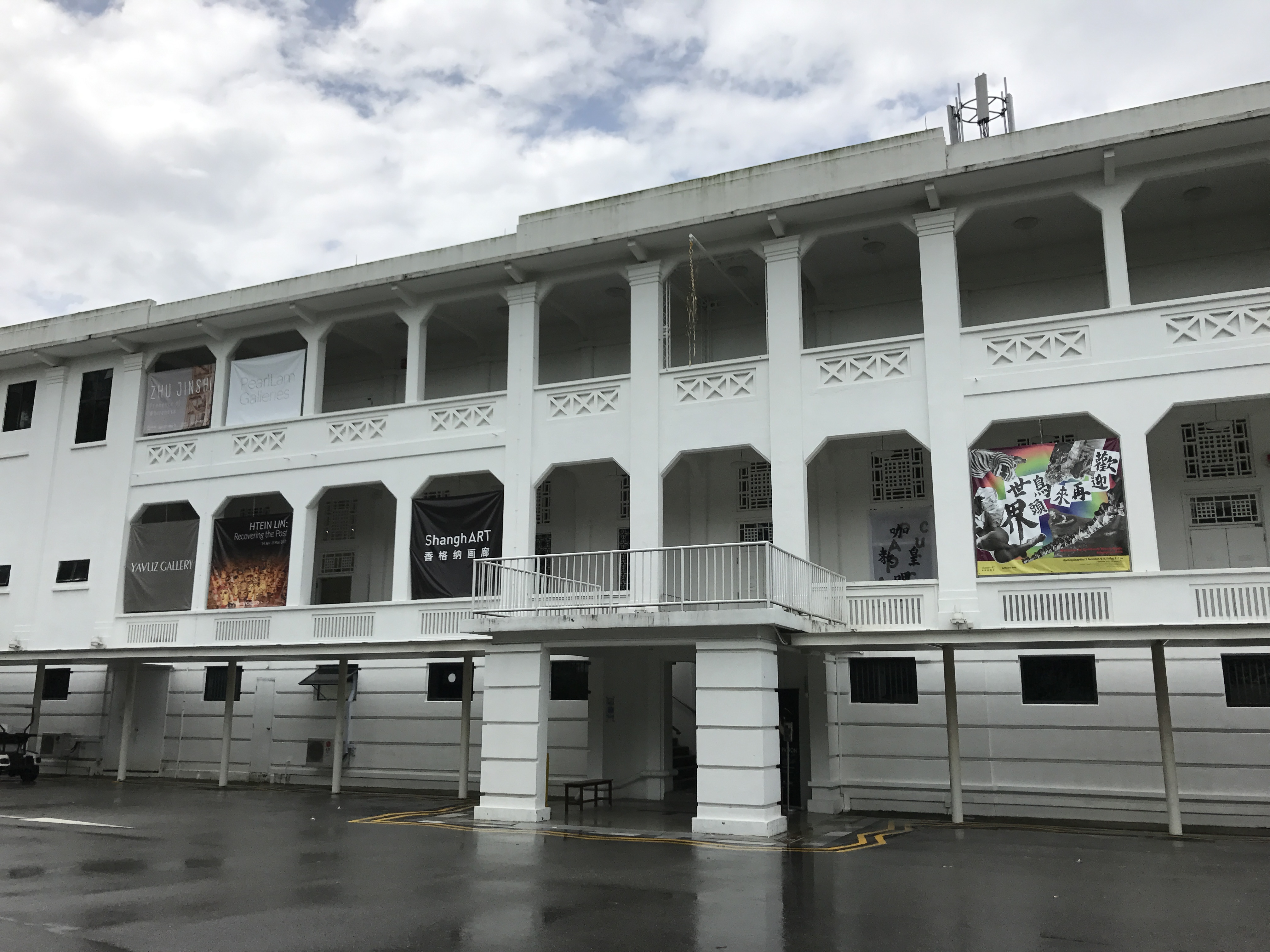
Singapore Art Museum interior. Photo: Wikimedia Commons / CC BY 3.0
Eligibility Conditions
The baseline eligibility condition for individual grants is Singapore citizenship or permanent residency. For organisational grants, the legal entity must be registered in Singapore as a company limited by guarantee, a society, or a charitable institution. Commercial galleries registered as private limited companies (Pte Ltd) are not eligible for most grant categories — the framework is structured around non-commercial cultural production rather than commercial trade.
This exclusion has been a recurring point of discussion in Singapore's arts sector. Gallery operators have argued that commercial galleries contribute significantly to the art ecosystem — they represent artists, facilitate international exposure, and sustain collector education — yet receive no direct access to NAC funding. The council's position, as stated in various consultation documents, is that commercial entities have access to other government support channels, including Enterprise Singapore's market development grants.
Exclusion Criteria
Applications are rejected at the administrative stage if the proposed activity has already commenced (grants cannot be applied for retrospectively), if the applicant has outstanding financial reporting obligations from previous grants, or if the project is assessed as primarily recreational rather than arts-practice in nature. The third criterion involves judgment, and NAC's assessment panels have discretion to request revised scope documents.
The Application Process
All NAC grant applications are submitted through the eSPACE portal at nac.gov.sg. The portal was redesigned in 2022 and now supports document uploads of up to 20MB per attachment. Applications require a project synopsis (maximum 500 words), a detailed budget with line-item justifications, a portfolio of relevant prior work, and supporting letters where third-party venues or collaborators are involved.
Assessment turnaround times vary by scheme. For Arts Creation Fund applications, NAC publishes a target of ten weeks from deadline to notification. In practice, artists who have applied report timelines ranging from eight to fourteen weeks depending on the volume of applications in a given round.
Unsuccessful applications receive written feedback outlining the primary reasons for rejection. This feedback is not always granular, but it does indicate whether the rejection was primarily on artistic grounds, feasibility grounds, or eligibility grounds — which matters for revising and reapplying.
Reporting Requirements
Grant recipients are required to submit a completion report within three months of project completion, or by the end of the grant period, whichever comes first. The report must include financial accounts reconciled against the approved budget, documentation of the completed activity (exhibition photography, publication copies, press mentions), and an attendance or reach figure where the project had a public audience component.
NAC conducts random audits of completion reports and reserves the right to request original receipts. Organisations with repeated late reporting or financial discrepancies are placed on a deferred eligibility list that restricts new applications for twelve months.
- Completed eSPACE application form
- Project synopsis (max 500 words)
- Detailed budget with justifications
- Portfolio of relevant prior work (PDF, max 20MB)
- CVs of key project personnel
- Letters of support from venues or partners (if applicable)
- Proof of citizenship or PR status
What the Grant Data Suggests About NAC Priorities
NAC does not publish a full list of grant recipients and award amounts, which limits external analysis. The available data — drawn from the council's annual reports and MCCY's published accounts — suggests that performing arts (theatre, dance, music) receives a larger aggregate share of disbursements than visual arts. This has been consistent over the past decade and reflects both the size of the performing arts sector and its greater dependence on public subsidy compared to the commercial art market.
Within visual arts funding, NAC has increased emphasis on public art since 2019, partly through the Public Art Trust which channels corporate and private donations alongside NAC contributions. The commissioning of permanent public artworks — murals, sculptures, and large-scale installations in public housing estates and transport nodes — has become a significant portion of visual arts grant activity.